Monsanto's fiendish plot to control the world's seed industry with the "Terminator Seed"
The legendary "Johnny Appleseed" (John Chapman) between 1800 and 1849 wandered the wilds of the Ohio Valley planting apple trees. Over 150 years later some of these trees are still bearing fruit. But in today's world large seed companies are striving to make what Johnny Appleseed did illegal.
Giant companies like Monsanto, producer of the Terminator seeds (page 104), are striving to stop farmers from saving and re-using their seeds from generation to generation. They require farmers to sign a licensing agreement which strongly prohibits the reuse of Monsanto seeds. They even hire investigators like the Pinkerton Detective Agency and have others spy on their neighbors to identify farmers who break their contracts. It's bad enough that they have turned America's heartland into a farming police-state; but it's absolutely unforgivable that they seek to keep third-world farmers (who usually cannot afford to buy new seeds every year) from feeding billions of people who depend on their crops.
Johnny Appleseed, one of the great American heroes, dreamed of a land covered with apple trees, a land where no one would go hungry. One hundred and fifty years later Monsanto has replaced Johnny Appleseed's joyous dream with a new and evil one of profit and famine.
We must protest against Monsanto and their efforts to control the world's seeds, plants and the people's food! Write and alert your congressmen and senators, and talk to family and friends to make them aware! Learn more about this shocking situation; protest and spread the word!
Keep World's Plant Seeds Alive - Not Sterile!
Until recently the magic of the garden, the joy of growing plants and food, was as simple as collecting Mother Nature's seeds and caring for them season after season. Since I was 5 years old I have taken great joy in collecting seeds and giving them away, spreading the beauty of the plants they contained throughout the world. My Dad filled me with wonder at the stories of Johnny Appleseed's accomplishments (see page 30), and I strive to follow his admirable path. Sweetpeas were my favorite.
My Dad and I gave away thousands of sweetpea seeds and they are all over the world. Now simple human pleasures such as this are in jeopardy. Some large seed companies now claim their seeds as "intellectual property." In this way, seed companies prohibit farmers by force from saving and re-using seeds from one crop to the next. Even more disturbingly, in recent years major seed companies have made great strides in genetically engineering sterile seeds that sprout plants incapable of reproducing.
If Dad and I didn't collect and spread these sweetpea seeds around the world, there would be no seed legacy to give us joy. These seeds would be no more than rotting pellets in the ground. Save the world's seeds for you and your children! Write your elected representatives and protest with strong words that you want this stopped!
Make your voice heard!
Visit the etcgroup website for more info on genetic engineering of seeds: www.etcgroup.org
Terminator Sterile Seeds Threaten World's Food Freedom!
Terminator seeds are sterile crop seeds patented and marketed by the Monsanto Corp. that have been biologically altered to sprout a permanently infertile plant. The large scale use of these seeds (which is already underway in over 78 countries) could directly threaten the well-being of 1.4 billion people who now depend on food grown with fertile seeds.
This would present a huge risk to the world because it could spread and sterilize all living plants, trees, etc. Farmers (and their neighbors, with plants 'accidentally' cross-pollinated by Terminator plants) would be forced to buy new seeds every year. For many of these farmers financial ruin would result, thus bringing on misery and famine for millions worldwide. Monsanto's seed program has no benefits for the world, only for the company's pocketbook. Discover Monsanto's fiendish plot to control the world's seed industry.
Friday, February 22, 2008
Don't Let Johnny Appleseed's Dream Die !


Monday, February 18, 2008
The Story of Stuff - Another Way
The Story of Stuff
The Story of Stuff is a 20 minute documentary that takes you on a provocative tour of our consumer-driven culture — from resource extraction to iPod incineration — exposing the real costs of our use-it and lose-it approach to stuff.
The movie is just the beginning of the story. Watch it, learn more and get involved here: StoryofStuff.com
The Story of Stuff - Ch.2: Extraction
The Story of Stuff - Ch.3: Production
The Story of Stuff - Ch.4: Distribution
The Story of Stuff - Ch.5: Consumption
The Story of Stuff - Ch.6: Disposal
The Story of Stuff - Ch.7: Another Way
Many people who have seen The Story of Stuff have asked what they can do to address the problems identified in the film.
Each of us can promote sustainability and justice at multiple levels: as an individual, as a teacher or parent, a community member, a national citizen, and as a global citizen. As Annie says in the film, "the good thing about such an all pervasive problem is that there are so many points of intervention." That means that there are lots and lots of places to plug in, to get involved, and to make a difference. There is no single simple thing to do, because the set of problems we're addressing just isn't simple. But everyone can make a difference, but the bigger your action the bigger the difference you'll make. Here are some ideas:
10 Little and Big Things You Can Do
- Power down! A great deal of the resources we use and the waste we create is in the energy we consume. Look for opportunities in your life to significantly reduce energy use: drive less, fly less, turn off lights, buy local seasonal food (food takes energy to grow, package, store and transport), wear a sweater instead of turning up the heat, use a clothesline instead of a dryer, vacation closer to home, buy used or borrow things before buying new, recycle. All these things save energy and save you money. And, if you can switch to alternative energy by supporting a company that sells green energy to the grid or by installing solar panels on your home, bravo!
- Waste less. Per capita waste production in the U.S. just keeps growing. There are hundreds of opportunities each day to nurture a Zero Waste culture in your home, school, workplace, church, community. This takes developing new habits which soon become second nature. Use both sides of the paper, carry your own mugs and shopping bags, get printer cartridges refilled instead of replaced, compost food scraps, avoid bottled water and other over packaged products, upgrade computers rather than buying new ones, repair and mend rather than replace….the list is endless! The more we visibly engage in re-use over wasting, the more we cultivate a new cultural norm, or actually, reclaim an old one!
- Talk to everyone about these issues. At school, your neighbors, in line at the supermarket, on the bus…A student once asked Cesar Chavez how he organized. He said, "First, I talk to one person. Then I talk to another person." "No," said the student, "how do you organize?" Chavez answered, "First I talk to one person. Then I talk to another person." You get the point. Talking about these issues raises awareness, builds community and can inspire others to action.
- Make Your Voice Heard. Write letters to the editor and submit articles to local press. In the last two years, and especially with Al Gore winning the Nobel Peace Prize, the media has been forced to write about Climate Change. As individuals, we can influence the media to better represent other important issues as well. Letters to the editor are a great way to help newspaper readers make connections they might not make without your help. Also local papers are often willing to print book and film reviews, interviews and articles by community members. Let's get the issues we care about in the news.
- DeTox your body, DeTox your home, and DeTox the Economy. Many of today's consumer products – from children's pajamas to lipstick – contain toxic chemical additives that simply aren't necessary. Research online (for example, http://www.cosmeticsdatabase.com/) before you buy to be sure you're not inadvertently introducing toxics into your home and body. Then tell your friends about toxics in consumer products. Together, ask the businesses why they're using toxic chemicals without any warning labels. And ask your elected officials why they are permitting this practice. The European Union has adopted strong policies that require toxics to be removed from many products. So, while our electronic gadgets and cosmetics have toxics in them, people in Europe can buy the same things toxics-free. Let's demand the same thing here. Getting the toxics out of production at the source is the best way to ensure they don't get into any home and body.
- Unplug (the TV and internet) and Plug In (the community). The average person in the U.S. watches T.V. over 4 hours a day. Four hours per day filled with messages about stuff we should buy. That is four hours a day that could be spent with family, friends and in our community. On-line activism is a good start, but spending time in face-to-face civic or community activities strengthens the community and many studies show that a stronger community is a source of social and logistical support, greater security and happiness. A strong community is also critical to having a strong, active democracy.
- Park your car and walk…and when necessary MARCH! Car-centric land use policies and life styles lead to more greenhouse gas emissions, fossil fuel extraction, conversion of agricultural and wildlands to roads and parking lots. Driving less and walking more is good for the climate, the planet, your health, and your wallet. But sometimes we don't have an option to leave the car home because of inadequate bike lanes or public transportation options. Then, we may need to march, to join with others to demand sustainable transportation options. Throughout U.S. history, peaceful non-violent marches have played a powerful role in raising awareness about issues, mobilizing people, and sending messages to decision makers.
- Change your lightbulbs…and then, change your paradigm. Changing lightbulbs is quick and easy. Energy efficient lightbulbs use 75% less energy and last 10 times longer than conventional ones. That's a no-brainer. But changing lightbulbs is just tinkering at the margins of a fundamentally flawed system unless we also change our paradigm. A paradigm is a collection of assumptions, concepts, beliefs and values that together make up a community's way of viewing reality. Our current paradigm dictates that more stuff is better, that infinite economic growth is desirable and possible, and that pollution is the price of progress. To really turn things around, we need to nurture a different paradigm based on the values of sustainability, justice, health, and community.
- Recycle your trash…and, recycle your elected officials. Recycling saves energy and reduces both waste and the pressure to harvest and mine new stuff. Unfortunately, many cities still don't have adequate recycling systems in place. In that case you can usually find some recycling options in the phone book to start recycling while you're pressuring your local government to support recycling city-wide. Also, many products – for example, most electronics - are designed not to be recycled or contain toxics so recycling is hazardous. In these cases, we need to lobby government to prohibit toxics in consumer products and to enact Extended Producer Responsibility (EPR) laws, as is happening in Europe. EPR is a policy which holds producers responsible for the entire lifecycle of their products, so that electronics company who use toxics in their products, have to take them back. That is a great incentive for them to get the toxics out!
- Buy Green, Buy Fair, Buy Local, Buy Used, and most importantly, Buy Less. Shopping is not the solution to the environmental problems we currently face because the real changes we need just aren't for sale in even the greenest shop. But, when we do shop, we should ensure our dollars support businesses that protect the environment and worker rights. Look beyond vague claims on packages like "all natural" to find hard facts. Is it organic? Is it free of super-toxic PVC plastic? When you can, buy local products from local stores, which keeps more of our hard earned money in the community. Buying used items keeps them out of the trash and avoids the upstream waste created during extraction and production. But, buying less may be the best option of all. Less pollution. Less Waste. Less time working to pay for the stuff. Sometimes, less really is more.
Sunday, February 17, 2008
1-888-Not-Milk - the Health Risks of Milk
Milk Sugar is Indigestible
The enzyme required to digest milk sugar, lactose, is called lactase. It dis-appears from the human intestine at the age of three! That's right. After 3, milk is virtually indigestible. And what happens? When milk comes into contact with the acidic gastric juice after it is swallowed, it immediately forms thick, hard to digest curds that coat the stomach and intestines and hampers digestion. Estimates say that 50-50% of the world's adult population is lactose intolerant.
Milk Protein is Indigestible
The enzyme required to digest milk protein, casein, is called rennin. It too dis-appears from the human intestine at the age of three. Casein is used to make some of the strongest wood-working glues. Think what it can do to your insides.
Milk is Species-Specific
Cow's milk is meant for calves. Goat's milk for goats. Human milk for babies. The various antiobodies in the milk protect the young ones from diseases specific to the species.
No animal drinks milk after it is weaned
Except Man!
Milk is no longer recommended for infants below the age of one even by the American Association of Pediatricians! The Physican's Committee for Responsible medicine denounces the use of milk. They say (backed up by evidence) that it is the cause of many diseases
What about the Cruelty to Cows?
They are made forcibly pregnant every year to make them give milk. They are kept awake and milked at night so you can get your milk in the morning. They are fed banned drugs (oxytocin) to increase milk production. They are usually kept cramped up in unhygienic conditions, so they fall ill and get infected. To prevent this, they are fe huge amounts of anti-biotics which find their way into the milk.
Tuesday, February 12, 2008
Artificial Sweeteners Linked to Weight Gain
Monday, February 11, 2008 9:49 AM
Source
Want to lose weight? It might help to pour that diet soda down the
drain. Researchers have laboratory evidence that the widespread use of
no-calorie sweeteners may actually make it harder for people to control
their intake and body weight. The findings appear in the February issue
of Behavioral Neuroscience, which is published by the American
Psychological Association (APA).
Psychologists at Purdue University's Ingestive Behavior Research Center
reported that relative to rats that ate yogurt sweetened with glucose (a
simple sugar with 15 calories/teaspoon, the same as table sugar), rats
given yogurt sweetened with zero-calorie saccharin later consumed more
calories, gained more weight, put on more body fat, and didn't make up
for it by cutting back later, all at levels of statistical significance.
Authors Susan Swithers, PhD, and Terry Davidson, PhD, surmised that by
breaking the connection between a sweet sensation and high-calorie food,
the use of saccharin changes the body's ability to regulate intake. That
change depends on experience. Problems with self-regulation might
explain in part why obesity has risen in parallel with the use of
artificial sweeteners. It also might explain why, says Swithers,
scientific consensus on human use of artificial sweeteners is
inconclusive, with various studies finding evidence of weight loss,
weight gain or little effect. Because people may have different
experiences with artificial and natural sweeteners, human studies that
don't take into account prior consumption may produce a variety of
outcomes.
Three different experiments explored whether saccharin changed lab
animals' ability to regulate their intake, using different assessments –
the most obvious being caloric intake, weight gain, and compensating by
cutting back.
The experimenters also measured changes in core body temperature, a
physiological assessment. Normally when we prepare to eat, the metabolic
engine revs up. However, rats that had been trained to respond using
saccharin (which broke the link between sweetness and calories),
relative to rats trained on glucose, showed a smaller rise in core body
temperate after eating a novel, sweet-tasting, high-calorie meal. The
authors think this blunted response both led to overeating and made it
harder to burn off sweet-tasting calories.
"The data clearly indicate that consuming a food sweetened with
no-calorie saccharin can lead to greater body-weight gain and adiposity
than would consuming the same food sweetened with a higher-calorie
sugar," the authors wrote.
The authors acknowledge that this outcome may seem counterintuitive and
might not come as welcome news to human clinical researchers and
health-care practitioners, who have long recommended low- or no-calorie
sweeteners. What's more, the data come from rats, not humans. However,
they noted that their findings match emerging evidence that people who
drink more diet drinks are at higher risk for obesity and metabolic
syndrome, a collection of medical problems such as abdominal fat, high
blood pressure and insulin resistance that put people at risk for heart
disease and diabetes.
Why would a sugar substitute backfire? Swithers and Davidson wrote that
sweet foods provide a "salient orosensory stimulus" that strongly
predicts someone is about to take in a lot of calories. Ingestive and
digestive reflexes gear up for that intake but when false sweetness
isn't followed by lots of calories, the system gets confused. Thus,
people may eat more or expend less energy than they otherwise would.
The good news, Swithers says, is that people can still count calories to
regulate intake and body weight. However, she sympathizes with the
dieter's lament that counting calories requires more conscious effort
than consuming low-calorie foods.
Swithers adds that based on the lab's hypothesis, other artificial
sweeteners such as aspartame, sucralose and acesulfame K, which also
taste sweet but do not predict the delivery of calories, could have
similar effects. Finally, although the results are consistent with the
idea that humans would show similar effects, human study is required for
further demonstration.
Thursday, February 7, 2008
People think vegans are weird because we eat tofu?
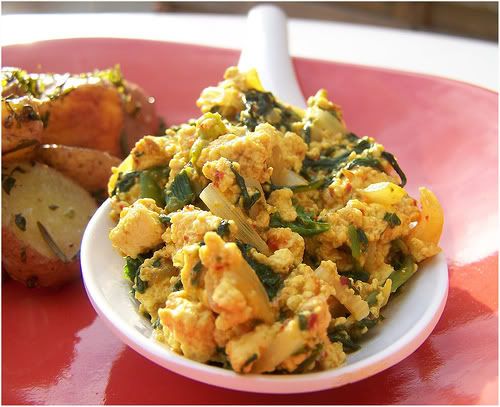
People eat meat because it tastes good! They've acquired a taste for and an addiction to meat. I didn't stop eating meat because of the taste. I stopped for ethical reasons.
One of the coolest things about veganism nowadays is that you can have the same smell, taste and texture of animal products without the cruelty and ill health effects. No one has to suffer and die for your dinner any more. Bacon, ham, sausage, chicken, turkey, steak, tuna, hamburgers, hot dogs, milk and cheese can be made with soy, wheat or rice. Most grocery stores carry these products. If your local store isn't stocked, just ask them to bring it in. Stores exist to make money. They sell meat because people buy meat. If people buy soy meat, they'll sell soy meat, which has already begun. Don't forget about ethnic restaurants for great vegan selections as well. Indian, Middle Eastern, Mexican, Ethiopian and Italian restaurants serve plenty of vegan food. Chinese, Japanese, Thai, Korean and Vietnamese places let you substitute tofu for the meat in any of their dishes. Check out the Shopping Guide to the Best Vegan Food and Clothing on this website for detailed info about vegan food. For a detailed list of animal ingredients to avoid, please check out www.HappyCow.net. Click on the HEALTH & NUTRITION section, and then click on INGREDIENTS.
You are most likely wrinkling your nose in disgust at the thought of soy meat. I did the same around 10 years ago. Isn't it illogical, though, to believe soy meat is gross when it's made of soy, vegetables, grains and spices? Yet meat, the dismembered corpse of an animal, comprised of blood, flesh, veins, muscles and tendons, is considered delectable by millions of meat-eaters. Why isn't a beverage [milk] that oozes out of a cow's udder considered disgusting? How about an egg from a hen? An unfertilized egg from a female is a period or part of a period. People scramble up hen periods in the morning and then they think vegans are weird because we don't make omelets anymore! What about bee vomit? People love it so much they renamed it honey. Honey comes straight from a bee's stomach and is regurgitated through the mouth. You can check that out with any wildlife biologist. But people don't want Bee Vomit Nut Cheerios. They want Honey Nut Cheerios. So they use a nice euphemism instead.
The standard diet of a meat-eater is blood, flesh, veins, muscles, tendons, cow secretions, hen periods and bee vomit. And once a year during a certain holiday in November, meat-eaters use the hollowed out rectum of a dead bird as a pressure cooker for stuffing. And people think vegans are weird because we eat tofu?
http://adaptt.org/veganism.php#
Above picture is Tofu scrambled with spinach, spices and onion.
Thursday, January 31, 2008
Aspartame & Aspartame Poisoning
Stop using ALL artificial sweetners... Use alternatives such as Stevia, an all natural herbal sweetner 0 calories, non-glycemic, natural.
Aspartame & Aspartame Poisoning
Aspartame, the artificial sweetener used to make Nutrasweet / Equal and sometimes labeled as phenylalanine in products, has been the subject of controversy - both because of its safety and the circumstances surrounding its approval. Considering possible connections between aspartame and diseases such as brain tumors, brain lesions, and lymphoma, and taking into account alleged conflicts of interest during the approval process, you owe it to yourself to learn the facts - not simply what the lobbyists and manufacturer want you to know. Before you begin exploring DORway, As a primer before entering the site, check out the following videos and links:
Aspartame & Rumsfeld | Aspartame On FOX New | Dr. Blaylock On Aspartame | Aspartame, Cancer & Kids | Aspartame On Wikipedia
DORway's Mission - Anti Aspartame Activism
Why DORway? DORway stands for David Oliver Riet'z WAY of paying back the Internet for providing the small, hard-to-find (and oblique) aspartame article he nearly missed, but that he credited with extending his life. That file was the 1996 FDA list of 92 symptoms of aspartame poisoning. This site contains about 800 Web pages of solid documentation showing that aspartame is neither a decent diet aid, nor was it ever proven to be safe for human consumption! Aspartame must be removed from our diet, but only you, the consumer, can effect its removal. In creating DORway, Dave's primary concern lay with the 250,000,000 unknowing victims (Monsanto's own figure) - all of whom are in some (guaranteed) stage of "aspartame disease," and who, as he once did, may desperately NEED this aspartame information. But even with over four million visitors (as of Nov. 23, 2003), DORway has reached but a small percentage of these folks. Please pass this FREE health-restoring and perhaps life-saving information to everyone you care about!
Aspartame Poisoning - The cure is FREE
The "cure" for those with "aspartame poisoning" is FREE. There can be nothing "controversial" about eliminating something from one's diet and waking up feeling better.
Could You Have Aspartame Poisoning? Take the 60-Day Challenge
Try the FREE at-home 60-day NO-aspartame self-test, and simply observe the results. All we ask is that each and every visitor tell at least TWO others about DORway and about the dangers of Aspartame. And if they have Internet access, capture and use the aspartame help.txt info file that has a good overview of DORway and commented links to the aspartame articles on this huge site.
Aspartame Poisoning - NOT an Internet Hoax
DORway.com opened Searle's "Pandora's" book of facts on aspartame during September of 1996. For over four years Monsanto (who bought Searle in 1985), their many PR and law firms, visited DORway.com many thousands of times (documented by IP addresses). The FDA, CDC and other entities visited, as well. The highly litigious Monsanto was unable to find anything to use against the site in an effort to close it down and relieve the growing pressures on its dying aspartame cash cow. Obviously, they cannot argue with the documentation (the most damning of which comes from the FDA and sworn testimony).
While two anti-aspartame Web sites (1996) grew to tens of thousands (as of October, 2001, Google.com had over 80,000), and while Nutrasweet's 28 million pounds of aspartame sold during 1996 slipped to only 20 million pounds during 1998, Monsanto sought to counter the truth (and their negative "good growth") with pro-aspartame WEB sites. When the "Nancy Markle" Email appeared during December, 1998, Monsanto and friends panicked. Monsanto, FDA, ADA, IFIC, MSFacts, TIME, CNN, LA Times, and a lot more who stood to LOSE if aspartame were recalled, ALL JOINED HANDS to call our information and the facts an "Internet hoax." Want a hint at the whole truth? Simply compare their messages, and then look for the $$$ connection. And the FDA? Just think future industry jobs and the fact that they are culpable of approving this cumulative toxic poison.
During mid February, 1999, while the many PRO aspartame articles seemed to be failing to turn the tide, Monsanto seemed to have made a momentous decision and stopped visiting DORway until after July. In April, they sold their Phenylalanine facilities (half of aspartame) to Great Lakes Chemical (GLC) for 125 million dollars. (A year later, GLC sued Monsanto for the 71 MILLION dollar shortfall in expected sales.) On the first of July, 1999, Monsanto put the Nutrasweet Co. on the auction block with TWO other companies - THREE of which had "combined sales of a billion dollars." So much for "good growth". It took another 10 months for Monsanto to find an investment firm that would relieve them of their growing burden.
Note: Dr. Friedman, who quit the FDA when Jane Henney was selected to become the permanent FDA commissioner (1999), elected to sign on with G. D. Searle as a senior vice president at a purported cushy $500,000 a year. He went to work for someone he was supposed to regulate. Could this new job be his reward for ignoring citizen complaints and defending aspartame and rbGH? Perhaps more importantly, does the U.S. have a congress that cares? Is there a justice department really interested in prosecuting fraud and genocide for huge profits? So far, the answers have all been NO!
DORway consists of hundreds of pages. Most TEXT files on this site can be obtained from the archives. For a good overview and commented links please download a copy of aspertame help.txt
- David O. Rietz, original founder and webmaster of DORway
Dave wants his DISCOVERY to be echoed by all aspartame users!
Aspartame is NOT a natural substance!
Aspartame is NOT a diet enhancement product!
Aspartame is NOT safe - for ANYONE!
Aspartame is NOT a food "additive"
Aspartame is an UNREGULATED and UNSAFE DRUG! (It was originally slated to be a peptic ulcer drug!)
Aspartame in liquids turns to FORMALDEHYDE above freezing!
Aspartame is even worse for DIABETICS!
Aspartame poisoning is cumulative (it adds up!)
Aspartame byproducts get stored in your FAT!
Aspartame has 92 "official" side effects (the worst is DEATH!)
Aspartame MIMICS a wide range of problems
Aspartame side effects are USUALLY MISDIAGNOSED! (By 21 doctors, in my case!)
Aspartame is unfit for human consumption!
Aspartame's approval by the FDA is A SHAMELESS tragedy!
Aspartame's approval for use in EVERYTHING is far worse!
Who are the culprits? FDA, Searle, Monsanto, NutraSweet and more!
The ONLY "CURE" is total exclusion from the diet!
TOTAL recovery may not be possible!
Only an irate and active PUBLIC can rid the world of this POISON!
If YOU have been affected... REPORT IT! GET INVOLVED!
DORway Disclaimer
DORway to Discovery is an INFORMATION site only. It is not a source of medical advice. Any and all suggestions stem from personal experiences (of any of the thousands of cases available). This information is presented FREE of all charge. It is yours to use as you deem reasonable and fitting. Any and all information you feel is important should be presented to your TRUSTED medical practitioner for evaluation and incorporation into YOUR personal situation.


 Posts
Posts


